
 Trout Lure Set Silver and Gold 10 Pack TLS10PC-3
$29.99
Trout Lure Set Silver and Gold 10 Pack TLS10PC-3
$29.99
Trout Spoons
Shop trout spoons and wobblers for New Zealand freshwater fishing. These metal trout lures are useful for casting from lake edges, river mouths, canals, streams and deeper pools. Choose silver or gold for natural baitfish flash, brighter colours for visibility, and compact spoons when trout are feeding on smaller prey.
Popular Right Now
Trout Lure Set Silver and Gold 10 Pack TLS10PC-3
$29.99
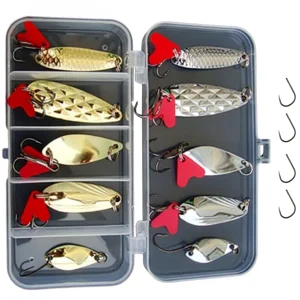 Trout Lures Set Suckerme TLS10PC-1 10 Pack Gold and Silver Spoon Lures with Storage Box and 4 Barbless Hooks
$24.99
Trout Lures Set Suckerme TLS10PC-1 10 Pack Gold and Silver Spoon Lures with Storage Box and 4 Barbless Hooks
$24.99
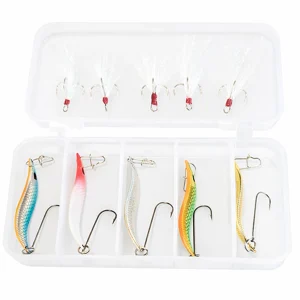 Trout Fishing Lures Set 5 Pack 5cm 7g S Curve Spoon Lures for NZ Trout
$39.99
Trout Fishing Lures Set 5 Pack 5cm 7g S Curve Spoon Lures for NZ Trout
$39.99
 Suckers Gold Spoon Lure S Shape 7g for Trout and Freshwater
$7.99
Suckers Gold Spoon Lure S Shape 7g for Trout and Freshwater
$7.99
 Silver Streaky S Shape Lure 7g Metal Spoon for Trout
$7.99
Silver Streaky S Shape Lure 7g Metal Spoon for Trout
$7.99
 Suckerme Red Sparky Spoon Lure 7g for Trout & Kahawai
$7.99
Suckerme Red Sparky Spoon Lure 7g for Trout & Kahawai
$7.99
 Suckerme Greenback S Curve Spoon Lure 7g for Trout & Perch
$7.99
Suckerme Greenback S Curve Spoon Lure 7g for Trout & Perch
$7.99
 Aqua Blaze S Curve 7g Trout Spoon Lure Single Hook for NZ Waters
$7.99
Aqua Blaze S Curve 7g Trout Spoon Lure Single Hook for NZ Waters
$7.99
 Suckerme Trout Spoon Lure Set with Barbed and Barbless Hooks
$19.99
Suckerme Trout Spoon Lure Set with Barbed and Barbless Hooks
$19.99
 Lakeflare Trout Spoon 3.4 cm 4.8 g Glitter-Finish for NZ Trout & Perch
$5.99
Lakeflare Trout Spoon 3.4 cm 4.8 g Glitter-Finish for NZ Trout & Perch
$5.99
Product Range
 SunsetStrike Trout Spoon Lure 3.4 cm 4.8g for NZ Trout & Perch
$5.99
 Suckerme Silver Flashback Spoon 5g Metal Spoon Lure
$4.99
Trout Lure Set Silver and Gold 10 Pack TLS10PC-3
$29.99
 Trout Lure Set Silver and Gold 10 Pack TLS10PC-4
$24.99
Trout Lures Set Suckerme TLS10PC-1 10 Pack Gold and Silver Spoon Lures with Storage Box and 4 Barbless Hooks
$24.99
 Suckerme Rainbow Flashback Spoon Lure 5g Metal Spoon Lure
$4.99
 Suckerme Golden Flashback Spoon Lure 5g Metal Spoon Lure
$4.99
Suckerme Red Sparky Spoon Lure 7g for Trout & Kahawai
$7.99
Suckers Gold Spoon Lure S Shape 7g for Trout and Freshwater
$7.99
Suckerme Greenback S Curve Spoon Lure 7g for Trout & Perch
$7.99
Aqua Blaze S Curve 7g Trout Spoon Lure Single Hook for NZ Waters
$7.99
Trout Fishing Lures Set 5 Pack 5cm 7g S Curve Spoon Lures for NZ Trout
$39.99
Silver Streaky S Shape Lure 7g Metal Spoon for Trout
$7.99
Lakeflare Trout Spoon 3.4 cm 4.8 g Glitter-Finish for NZ Trout & Perch
$5.99
Suckerme Trout Spoon Lure Set with Barbed and Barbless Hooks
$19.99
Trout Spoons & Wobblers NZ
Trout spoons are metal fishing lures designed to flash, wobble and move through the water like a small injured baitfish. In New Zealand, many anglers also call this style of lure a wobbler. Therefore, trout spoons and trout wobblers are closely related search terms.
This range includes compact trout spoons, S-curve spoon lures, gold and silver lure sets, and lightweight metal lures for freshwater fishing. They are useful when you want a lure that casts well, covers water quickly and creates strong visual movement during the retrieve.
Why Use Trout Spoons?
Trout spoons are popular because they are simple to fish and easy to carry. They work well for shore-based anglers because the metal body helps with casting distance. As a result, they are a practical choice for lake edges, river mouths, canals and open water.
- Useful for casting from shore, banks, jetties and lake edges.
- Good for rainbow trout and brown trout.
- Effective when trout are chasing small baitfish.
- Easy to change colours when conditions change.
- Available in compact sizes for streams and larger open-water areas.
Spoons, Wobblers and S-Curve Lures
A spoon lure usually has a curved metal body that produces a side-to-side action. This movement can look like a wounded fish, which may trigger a trout to strike.
A wobbler is a common name for this same style of lure in New Zealand. Some anglers use the word wobbler for wider metal lures with a strong swimming action. Others use it more generally for spoon-style trout lures.
S-curve spoons are designed to create extra movement during the retrieve. They can be useful when trout are following but not committing to a straight-running lure.
Choosing Trout Spoons for NZ Waters
For clear lakes and bright days, silver spoons are a strong starting point. They create a natural flash and can imitate small baitfish. Gold spoons are useful when the light is lower or the water has a slight stain.
For rivers and streams, smaller spoons are often easier to control. They can be cast across the current and retrieved through likely holding water. In faster or deeper water, choose enough weight to keep the lure working below the surface.
For canals, river mouths and deeper lake edges, a slightly heavier or brighter spoon can help you cover more water. However, trout can be selective. For this reason, it is worth carrying several colours and sizes.
Trout Spoon Colour Guide
Colour choice depends on water clarity, light and trout activity. There is no single best colour for every condition. However, this guide is a useful starting point.
- Silver: Best for clear water, bright days and baitfish-style flash.
- Gold: Useful in low light, evening conditions or lightly stained water.
- Red and orange: Good trigger colours when trout need a stronger visual target.
- Green: Useful when you want a brighter, high-visibility lure.
- Glitter or flash finishes: Helpful when extra sparkle may attract attention in deeper or open water.
How to Fish Trout Spoons
Cast the spoon beyond the water you want to cover. Let it sink briefly if the trout are holding deeper. Then retrieve at a steady speed so the lure wobbles without spinning unnaturally.
If trout are following but not striking, change your retrieve. Try a slower wind, a short pause or a small lift of the rod tip. A pause can make the spoon flutter, which may trigger a strike from a following trout.
In rivers, cast slightly upstream or across the current. Let the spoon work through the current while keeping light tension on the line. In lakes, cast along drop-offs, weed edges, stream mouths and visible structure.
Important NZ Hook Warning
Some trout spoons and wobblers may be supplied with barbed hooks, barbless hooks or treble hooks. These hook types may not be suitable or legal in every New Zealand trout fishery.
Before using any spoon lure, check the current rules for the region and waterway you plan to fish. Some waters require single hooks, barbless hooks or other specific hook setups. The Taupō trout fishery has separate rules managed by DOC.
If you plan to release trout, a single hook or barbless hook can make hook removal easier and reduce handling time. If you are unsure about a hook setup, check the local rules before fishing or replace the hook with a suitable single hook.
Check Fish & Game fishing regulations
Check DOC Taupō trout fishing rules
Trout Spoon Lure Sets
A trout spoon set is a practical choice if you want several colours and sizes in one tackle box. This gives you more options when water clarity, light or trout behaviour changes during the day.
Silver and gold sets are good starting points for beginners. Mixed colour sets are useful when you fish different locations, such as lakes, streams, canals and river mouths.
Frequently Asked Questions
Are trout spoons the same as wobblers?
They are closely related. In New Zealand, many anglers use the word wobbler for spoon-style metal trout lures that flash and wobble during the retrieve.
What colour spoon is best for trout?
Silver is a good starting colour in clear water. Gold can work well in lower light or stained water. Bright colours can help when trout need extra visual attraction.
Are spoon lures good for lake trout fishing?
Yes. Spoon lures cast well and cover water quickly, which makes them useful from lake edges, river mouths and open shoreline areas.
What size trout spoon should I use?
Smaller spoons suit streams, shallow edges and cautious trout. Slightly heavier spoons can help in deeper water, canals, lakes and windier conditions.
Can I use treble hooks on trout spoons in NZ?
Treble hook rules vary by region and waterway. Some waters have stricter hook requirements, and single hooks are often better for catch and release. Always check the current local rules before fishing.