 Flexible Crampons Vuno UCO Large EU 41-46 | US 7-12
$49.99

Our crampons NZ range includes lightweight flexible traction aids and adjustable 10, 12, 14 and 18-point models for packed snow and ice. Choose according to your footwear, expected terrain and winter experience.
Flexible Crampons Vuno UCO Large EU 41-46 | US 7-12
Flexible Crampons Vuno UCO Medium EU 36-40 and US 6-9
 Adjustable Crampons 12 Teeth Vuno Extreme for Size 6–13.5
 Strap On Crampons 10 Teeth Vuno Capricorn US Size 6–13.5
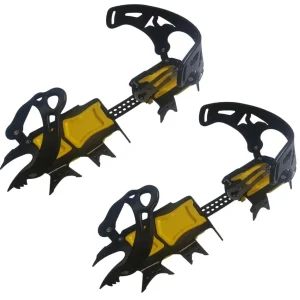 18 Teeth Crampons Vuno Hardcore Manganese Steel US 6–14
 Crampons for Hiking Boots 14 Teeth 25 mm BRS1425
 Universal Fit Crampons Strap-On Ice Cleats for Shoes & Boots
The right footwear traction depends on the surface, slope, duration of use and boots you intend to wear. A lightweight design may suit occasional icy patches, while a rigid adjustable frame provides greater support on longer sections of firm snow.
More teeth do not automatically make a model suitable for harder terrain. Frame stiffness, spike length, footwear compatibility and the user’s experience are equally important.
| Option | Best suited to | Fit and weight | Key difference |
|---|---|---|---|
| Universal four-point ice cleats | Frosty paths, icy driveways and short sections of relatively flat ground. | Stretchable universal harness with a compact carry bag. | The smallest and simplest option. These are not intended for steep slopes or alpine routes. |
| Vuno UCO flexible 18-point traction aids | Short snowfield crossings, icy tracks and emergency traction carried in a tramping pack. | Medium fits EU 36–40 or US 6–9 and weighs about 275g. Large fits EU 41–46 or US 7–12 and weighs about 285g. | The flexible rubber harness is lighter and easier to pack than a rigid metal frame. It is not designed for extended use or bare ground. |
| Vuno Capricorn 10-point strap-on model | Trampers wanting a lighter rigid design for packed snow, frozen tracks and occasional winter use. | Adjustable for approximately US sizes 6–13.5. Weight is about 600g with the storage bag. | Its 2.5cm teeth and lower weight make it easier to carry than the heavier 12- and 18-point Vuno models. |
| Vuno Extreme 12-point adjustable model | Longer snow and ice sections where deeper penetration and a rigid platform are preferred. | Adjustable for approximately US sizes 6–13.5. Weight is about 1.2kg. | The 4cm spikes are longer than those on the Vuno 10-point model. The integrated adjustment system does not require a separate hex key. |
| Adsports-BRS 14-point model | Winter hiking boots used on firm snow and icy ground where additional contact points are useful. | Fits approximately US sizes 6–12 or EU 36–45. Weight is about 1kg with the bag. | Fourteen 25mm points provide broad contact beneath the boot. Check that the harness and frame sit securely against your footwear. |
| Vuno Hardcore rigid 18-point model | Experienced winter trampers expecting prolonged firm snow or icy, lower-angle terrain. | Adjustable from 22–32cm for approximately US sizes 6–14 or EU 36–47. Weight is about 1.3kg. | This is the most substantial option in the range, with 5.5cm front spikes and additional side and underside contact points. |
Fit the selected model to the exact boots you plan to wear. The toe and heel should sit squarely within the binding, while straps should remain secure without twisting or loose movement. Footwear width, sole shape and stiffness can affect fit even when the stated shoe size is correct.
Practise fitting and removing the equipment at home. Also inspect the frame, teeth, straps and adjustment points before each trip. After use, remove dirt and snow, dry all components and store the metal parts away from moisture.
Traction equipment does not make an unsuitable route safe. New Zealand alpine conditions can change quickly, and a fall on steep ice can have serious consequences. Use equipment that matches your boots, skills and intended route.
Significant snow or high-consequence terrain may also require an ice axe, helmet, avalanche equipment and formal snowcraft training. Check mountain weather, track information and avalanche conditions before leaving, and turn back when the conditions exceed your experience.